Here are the summarized general rules (RG) of design, categorized by common topics. The competitive and innovative advantages are highlighted in bold, and their application is illustrated with Figures or Tables.
RG-CP-04. Take advantage of the manufacturing parameters with FFF to reduce times (for example, higher layer thickness) and to achieve the desired tolerances and roughness, use coating, chemical attack, and machining processes.
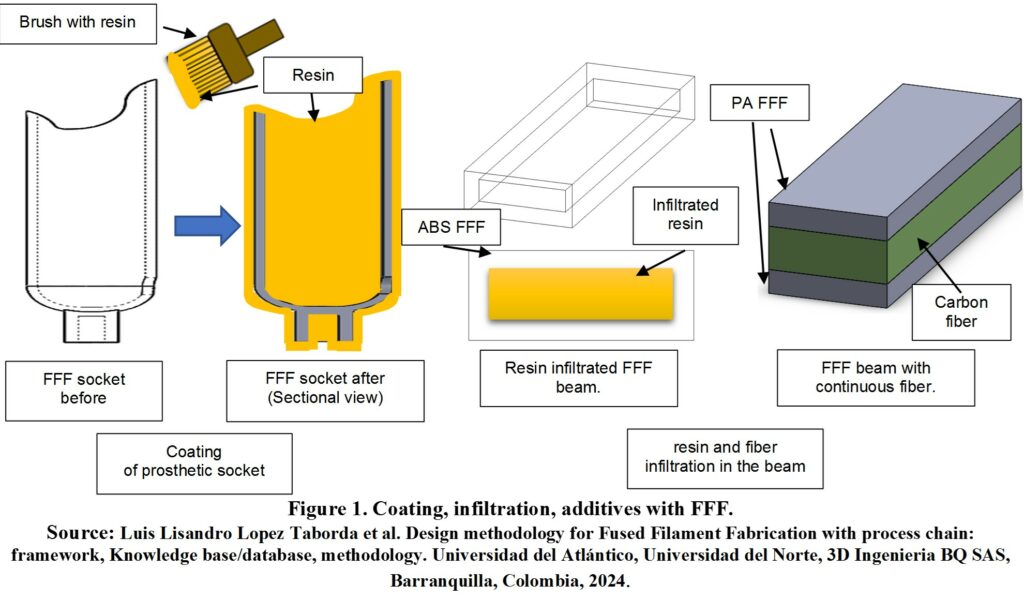
Figure 1 showcases resin application on a prosthetic socket, enhancing its appearance with a smooth, glossy finish.
In scenarios where post-processing determines the outcome, leveraging printing parameters for efficient fabrication, such as high speed and layer height, boosts production rates. Subsequent post-processing techniques refine the finish. This strategy reduces manufacturing time and costs while maintaining the same finish quality as the conventional process
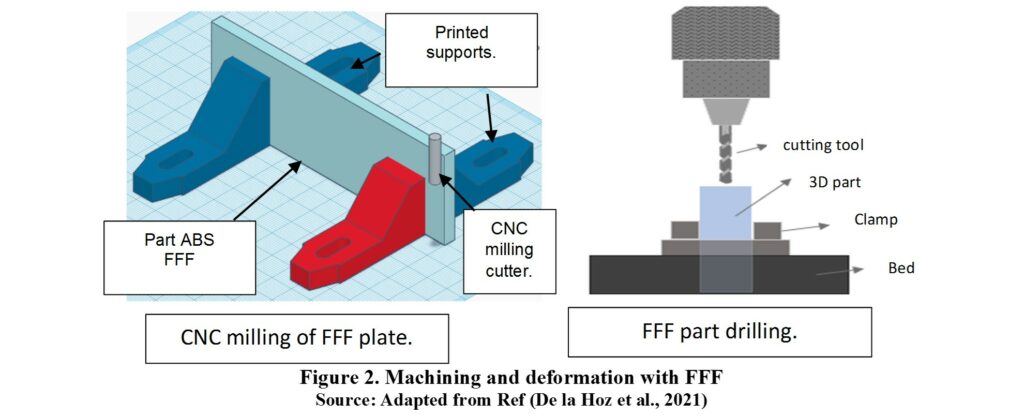
Figure 2 shows that the printed parts are subsequently machined on a CNC milling machine or conventional drill.
Nevertheless, incorporating post-print machining techniques (Figure 2) or coating (Figure 1), ensures superior finishes and tolerances surpassing the capabilities of 3D printing alone.
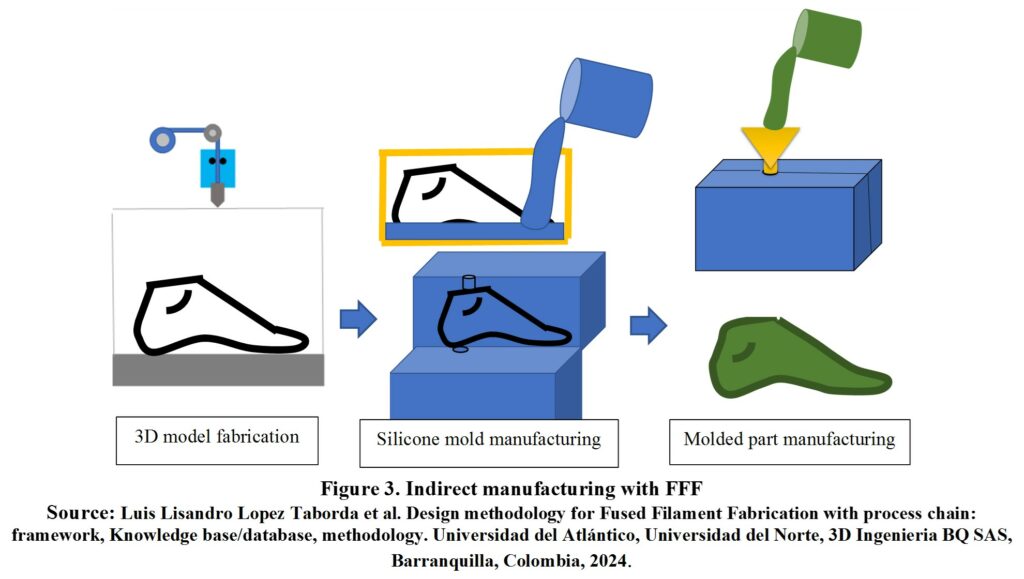
RG-CP-05. Manufacturing indirectly with FFF to support other processes with better tolerances and finishes: plastic injection, blow molding, hydroforming, and thermoforming.
Figure 3 shows an example of the guideline, but now considering tolerances and finishes.