Here are the summarized general rules (RG) of design, categorized by common topics. The competitive and innovative advantages are highlighted in bold, and their application is illustrated with Figures or Tables.
RG-TEFA-06. These can be improved by some of the strategies summarized in the respective database, for example, MEC-01 to MEC-08. However, it is generally recommended to characterize the properties for the specific case before taking a decision of the best strategies for improvement of mechanical properties, i.e., 3D printer, process parameters, material and suppliers, and particular operating conditions.
RG-TEFA-07. In case of failure, the natural FFF limits can be exceeded or displaced by using the FFF process chain recommendations, which concerns mechanical anisotropy. For example.
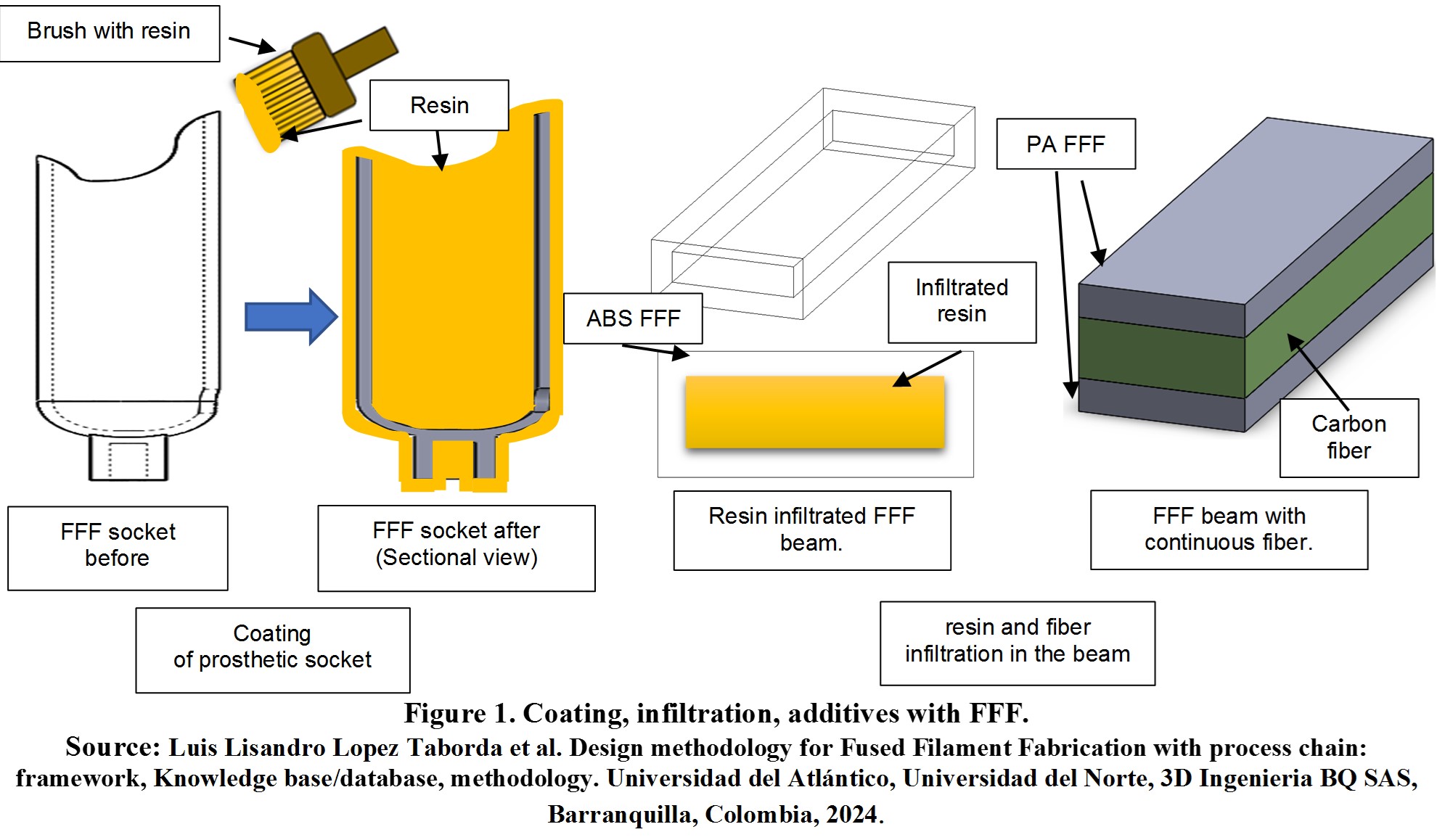
a) Use coating, infiltration, or fiber additives to reinforcement the printing part. Figure 1 showcases resin application on a prosthetic socket, enhancing its appearance with a smooth, glossy finish.
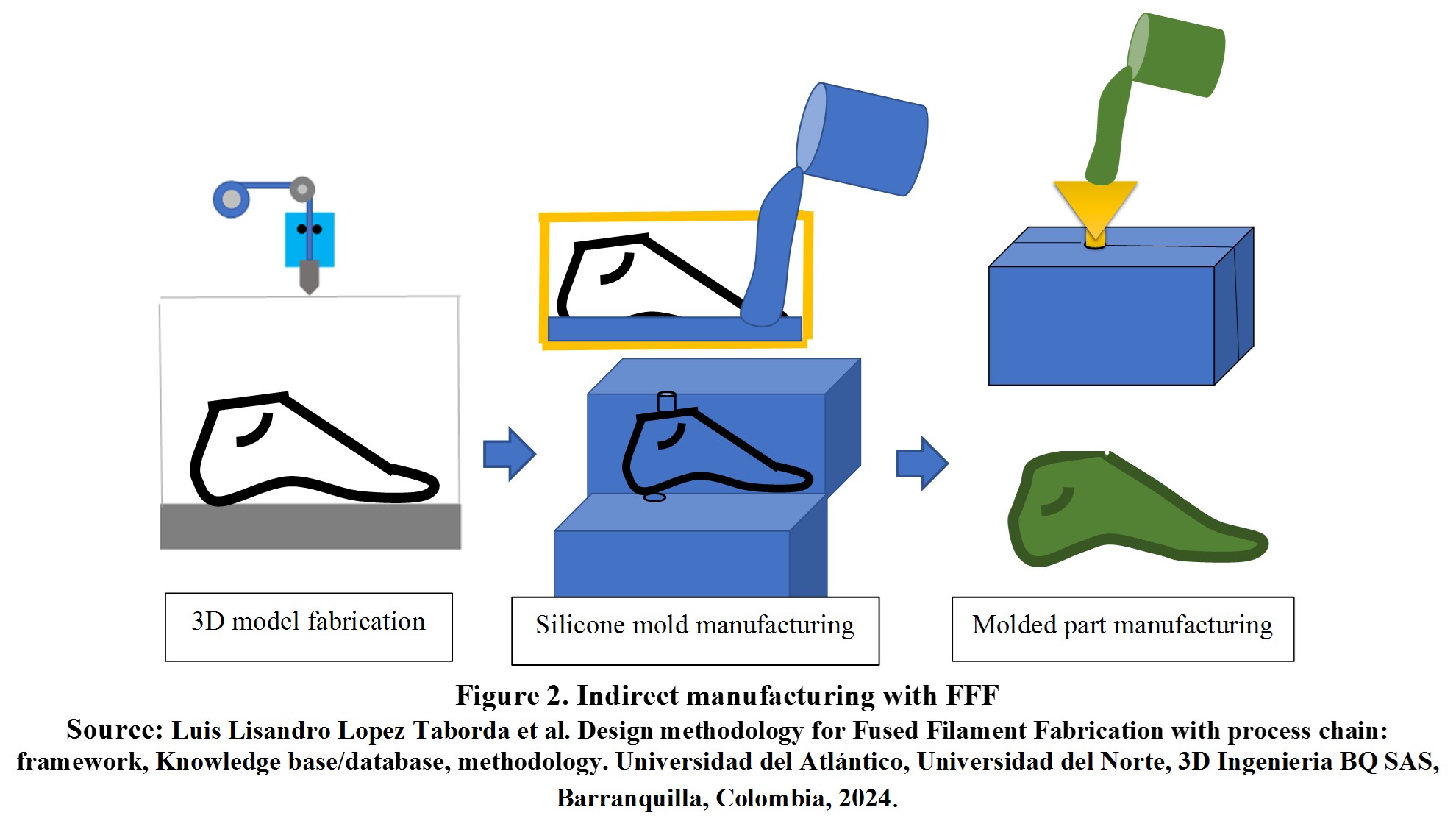
b) Manufacturing indirectly with FFF to support other processes with better mechanical strength: plastic injection, blow molding, hydroforming, and thermoforming. Figure 2 illustrates the manufacturing of prosthetic foot.
By using the printed model to create a silicone or resin mold and the mold to manufacture more flexible end part, the manufacturing process achieves higher damping properties than the printed process like PA o TPU.
c) Redesign a consolidated part into an assembly of several subsequently consolidated or unconsolidated parts. Consider the following possibilities:
FFF manufactures different parts of a single material but with different process parameters, such as orientation, and filler percentage, among others.
parts of different materials processed by FFF, with different process parameters each.
parts of different materials processed by FFF and other processes.
Depending on the case will have to be considered bonding or consolidation processes, all to take advantage of the material’s mechanical strength.