References
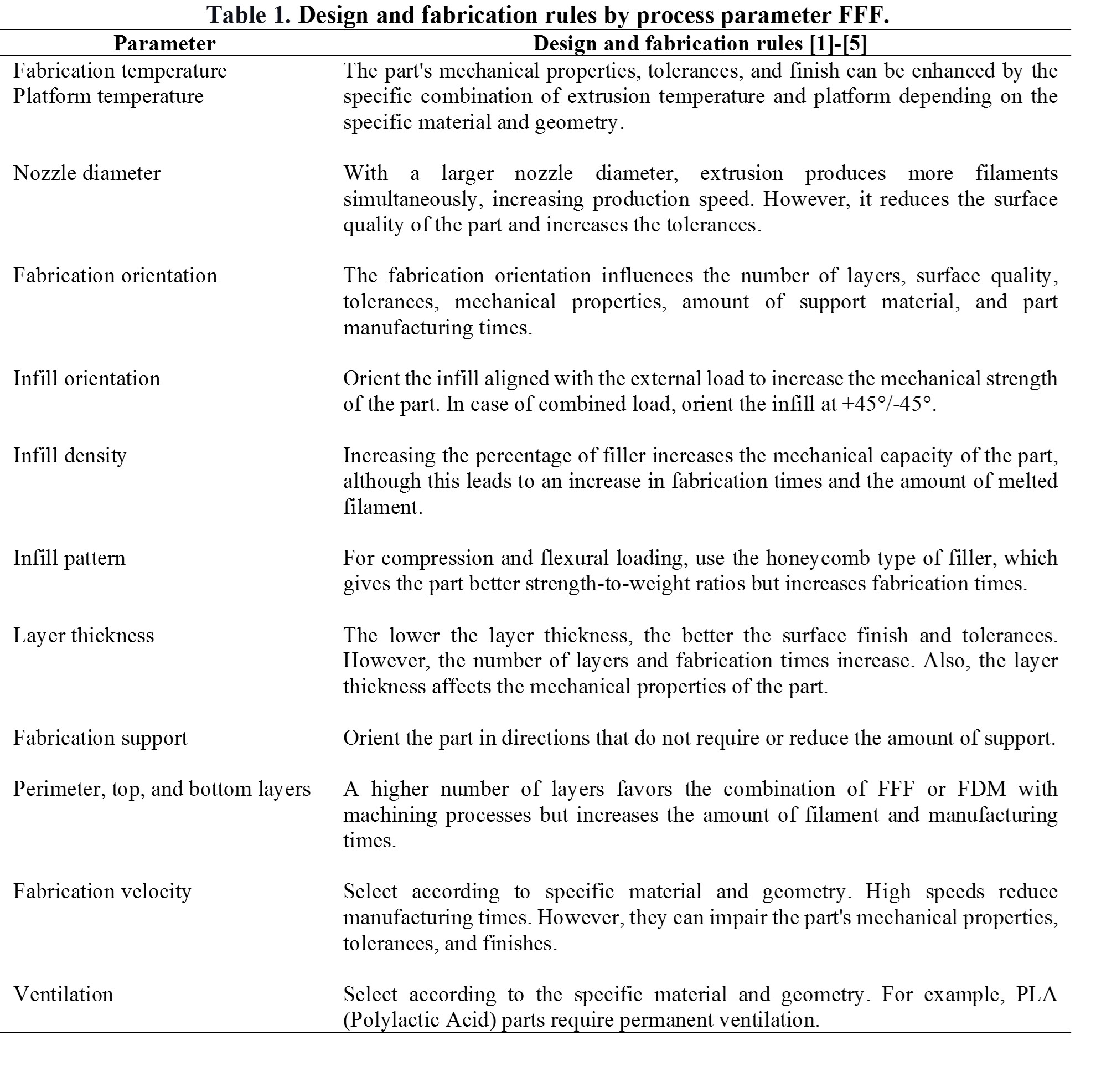
[1] H. I. Medellin-Castillo and J. Zaragoza-Siqueiros, “Design and Manufacturing Strategies for Fused Deposition Modelling in Additive Manufacturing: A Review,” Chinese J. Mech. Eng., vol. 32, no. 1, Jun. 2019.
[2] ASTM, “ASTM F3529-1: Guide for Additive Manufacturing — Design — Material Extrusion of Polymers.” p. 22, 2022.
[3] Luis Lisandro Lopez Taborda et al, Design methodology for Fused Filament Fabrication for medical and personalization applications: framework, Knowledge base/database, methodology, Universidad del Atlántico, Universidad del Norte, 3D Ingenieria BQ SAS, Barranquilla, Colombia, 2024.
[4] Luis Lisandro Lopez Taborda et al. Design methodology for Fused Filament Fabrication with process chain: framework, Knowledge base/database, methodology. Universidad del Atlántico, Universidad del Norte, 3D Ingenieria BQ SAS, Barranquilla, Colombia, 2024.
[5] Luis Lisandro Lopez Taborda et al. Design methodology for Fused Filament Fabrication with failure theory: framework, knowledge base/ database, methodology. Universidad del Atlantico, Universidad del Norte, 3D Ingenieria BQ SAS, Barranquilla, Colombia, 2024
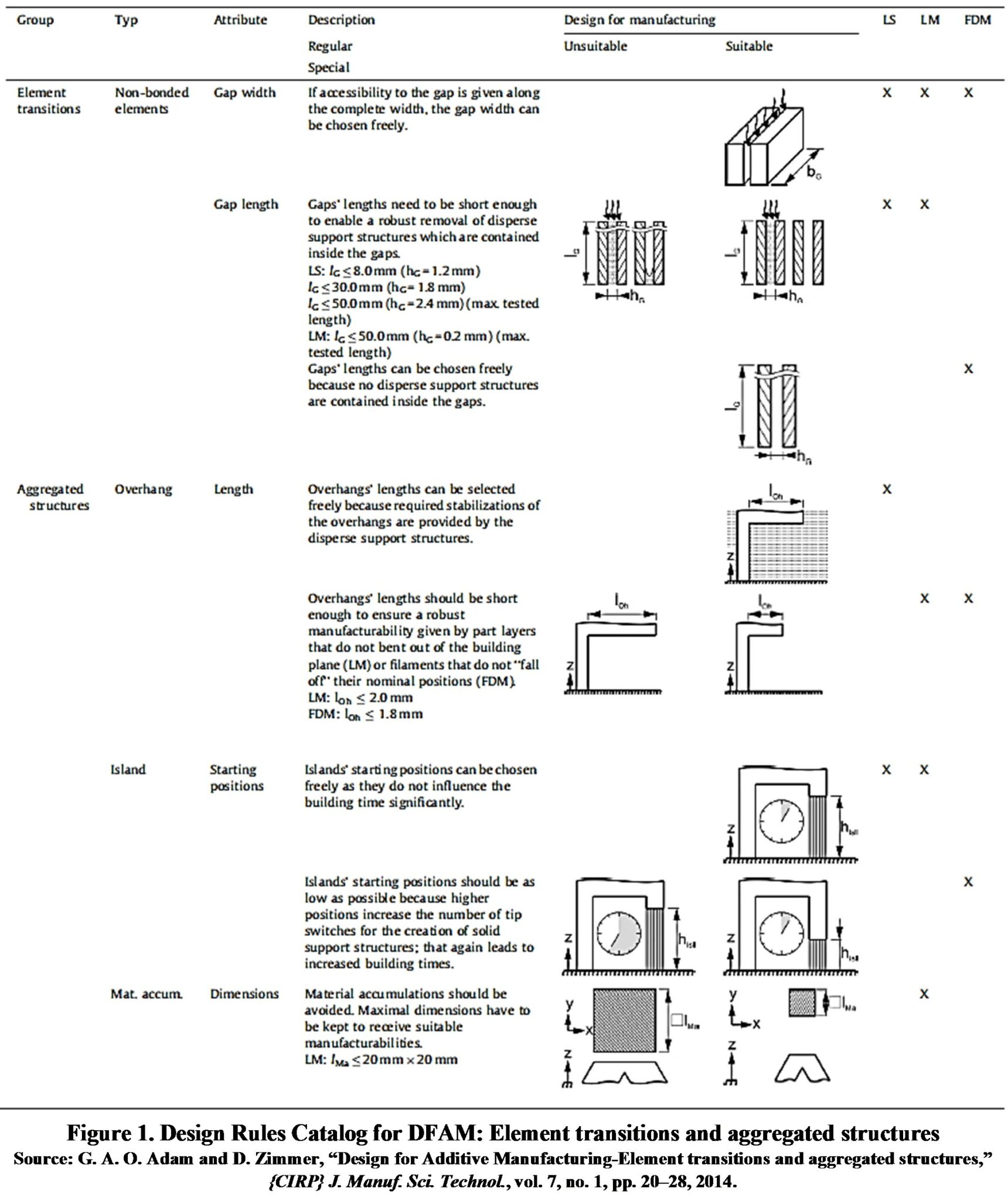
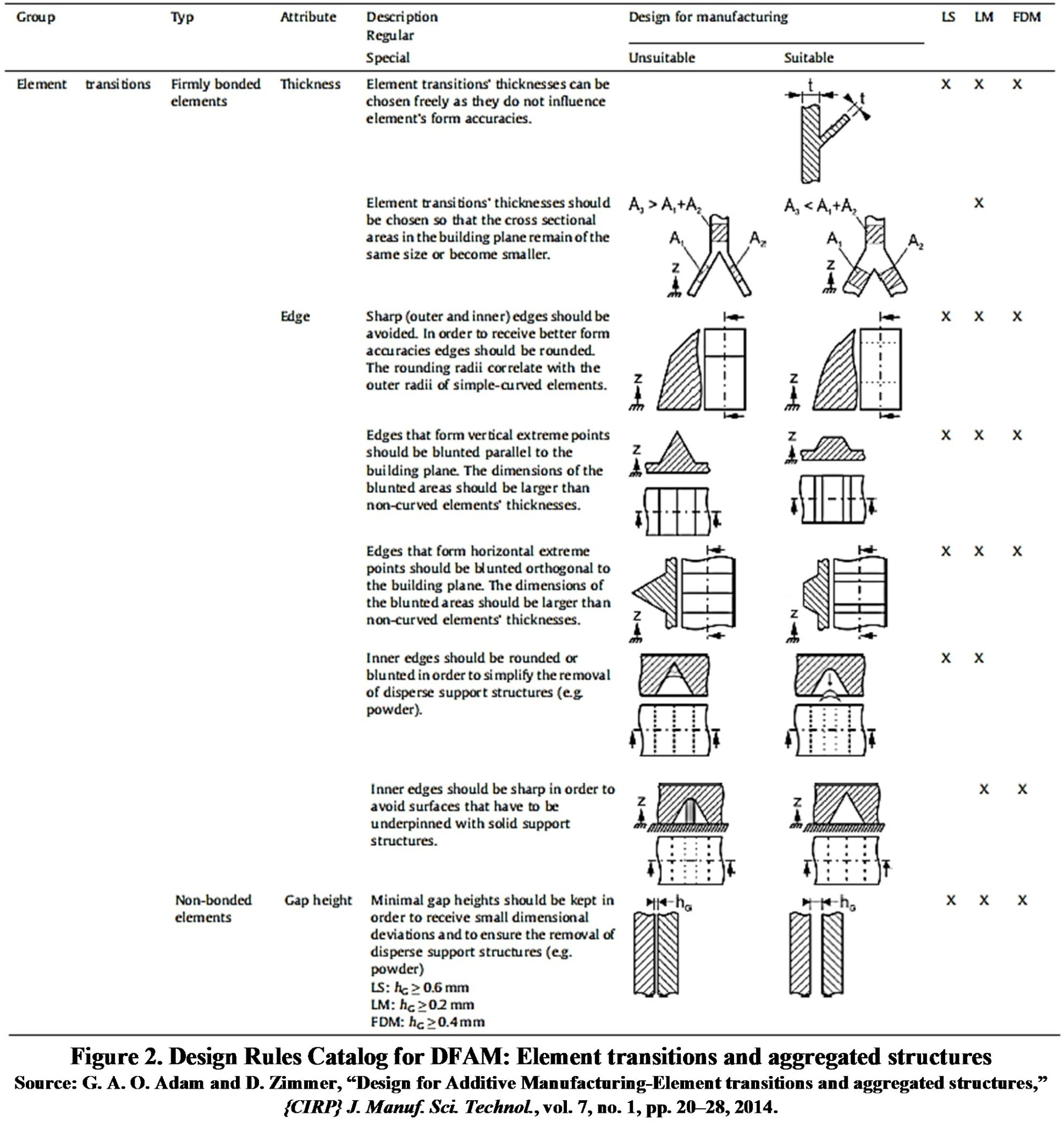
[6] G. A. O. Adam and D. Zimmer, “Design for Additive Manufacturing{\textemdash}Element transitions and aggregated structures,” {CIRP} J. Manuf. Sci. Technol., vol. 7, no. 1, pp. 20–28, 2014.
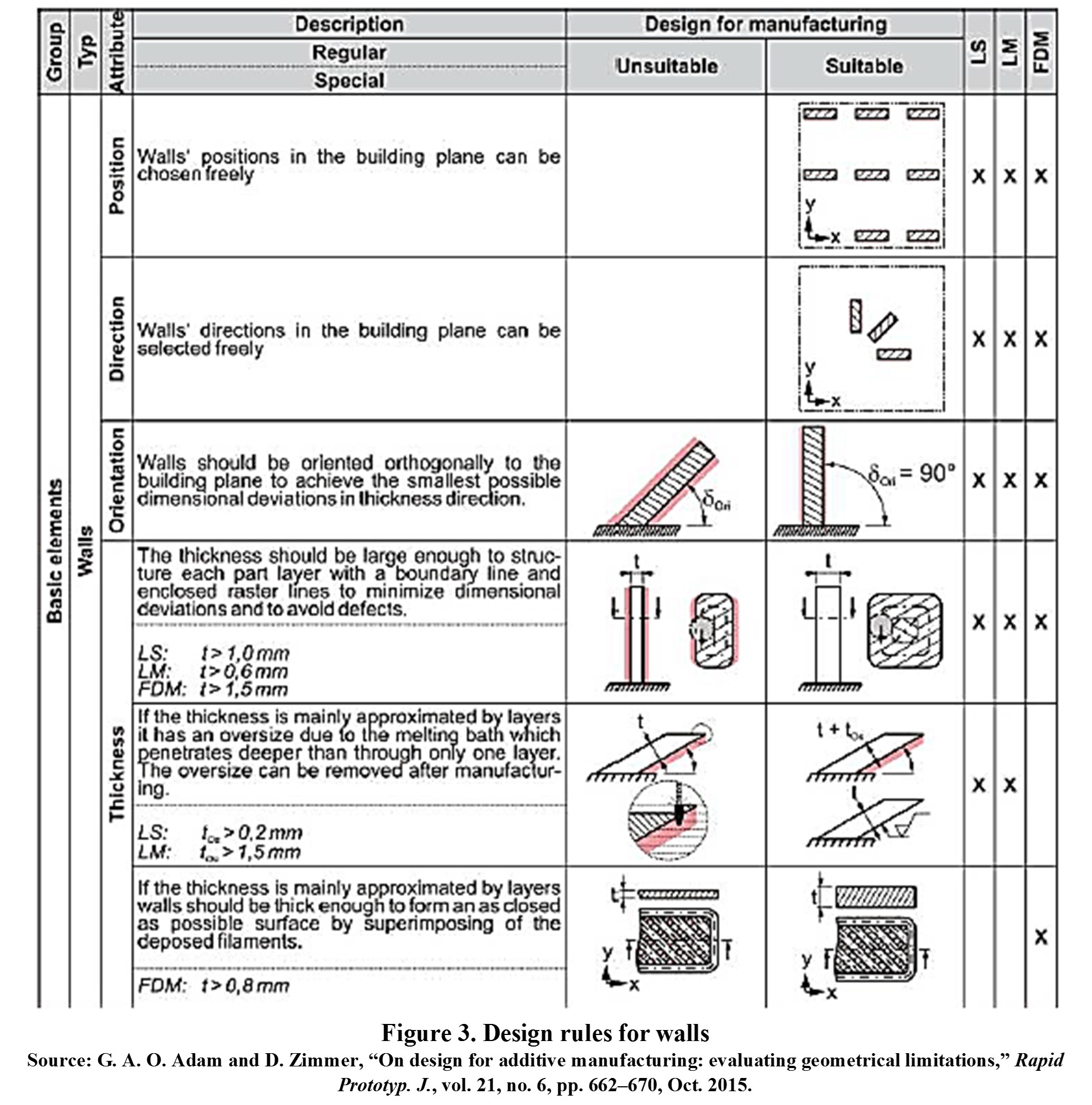
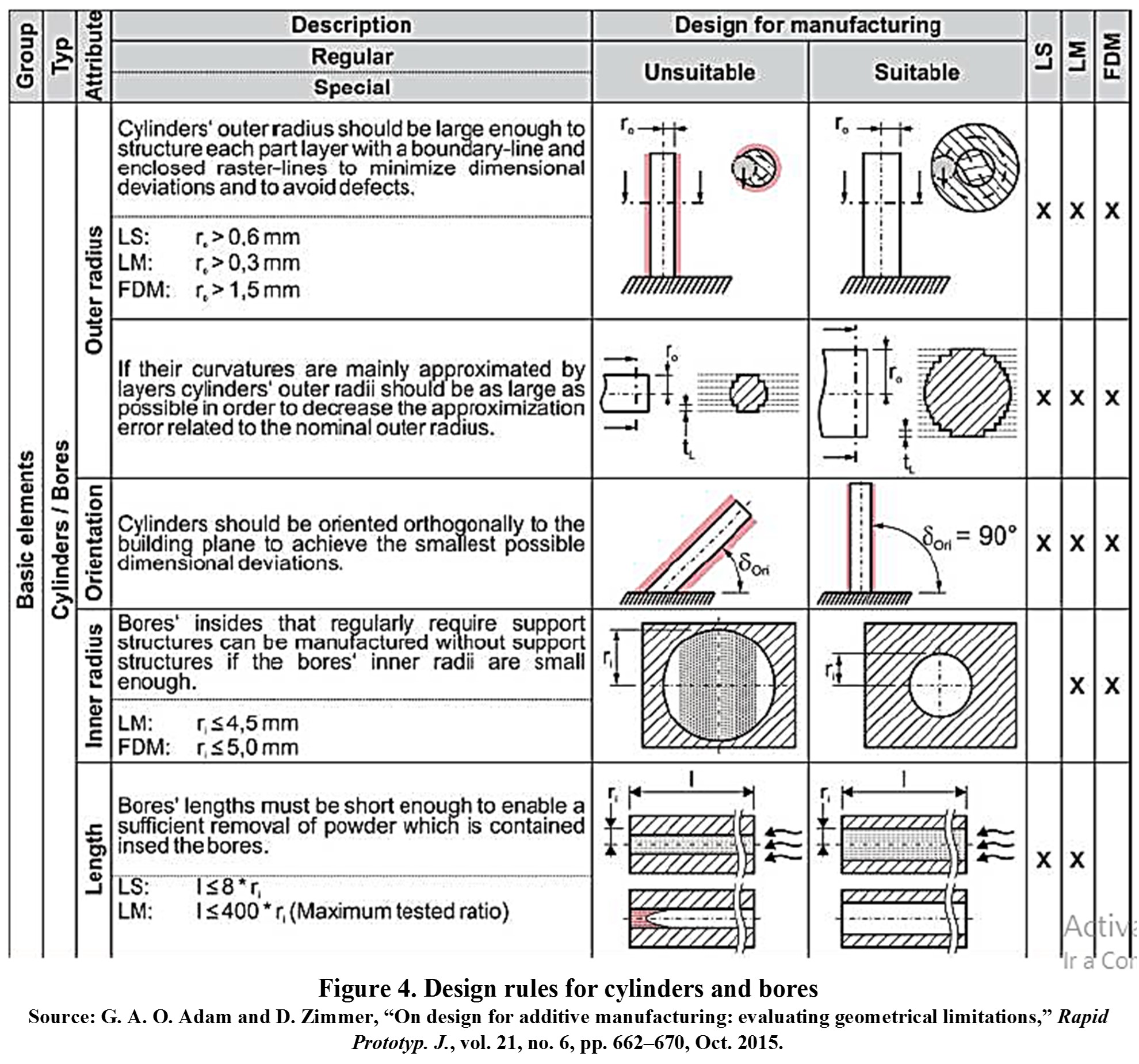
[7] G. A. O. Adam and D. Zimmer, “On design for additive manufacturing: evaluating geometrical limitations,” Rapid Prototyp. J., vol. 21, no. 6, pp. 662–670, Oct. 2015.
[8] C. A. Lauff, K. B. Perez, B. A. Camburn, and K. L. Wood, “Design Principle Cards: Toolset to Support Innovations With Additive Manufacturing,” in Volume 4: 24th Design for Manufacturing and the Life Cycle Conference$\mathsemicolon$ 13th International Conference on Micro- and Nanosystems, 2019.
[9] A. Blösch-Paidosh, S. Ahmed-Kristensen, and K. Shea, “Evaluating the Potential of Design for Additive Manufacturing Heuristic Cards to Stimulate Novel Product Redesigns,” in Volume 2A: 45th Design Automation Conference, 2019.
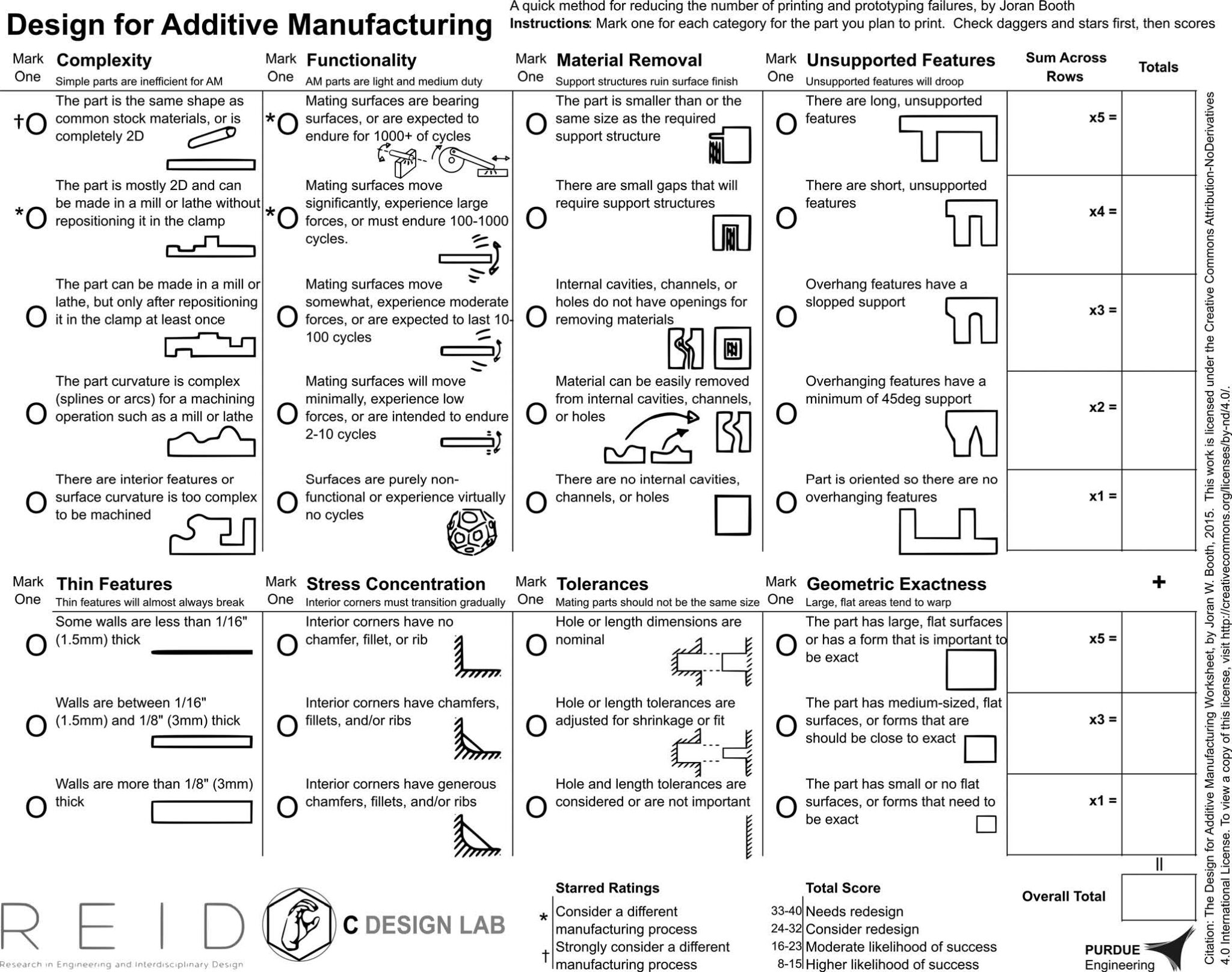
[10] J. W. Booth, J. Alperovich, P. Chawla, J. Ma, T. N. Reid, and K. Ramani, “The Design for Additive Manufacturing Worksheet,” J. Mech. Des., vol. 139, no. 10, p. 100904, 2017.