“Hybrid-AM processes” uses AM with one or more secondary processes or energy sources that are fully coupled and affect part quality, functionality, and process yield ” [1]. In this page, “process chain” refers to post-processing operations or secondary processes that do not involve full coupling. The term “FFF process chain or process chain with FFF” refers to combining conventional manufacturing processes with FFF or FDM.
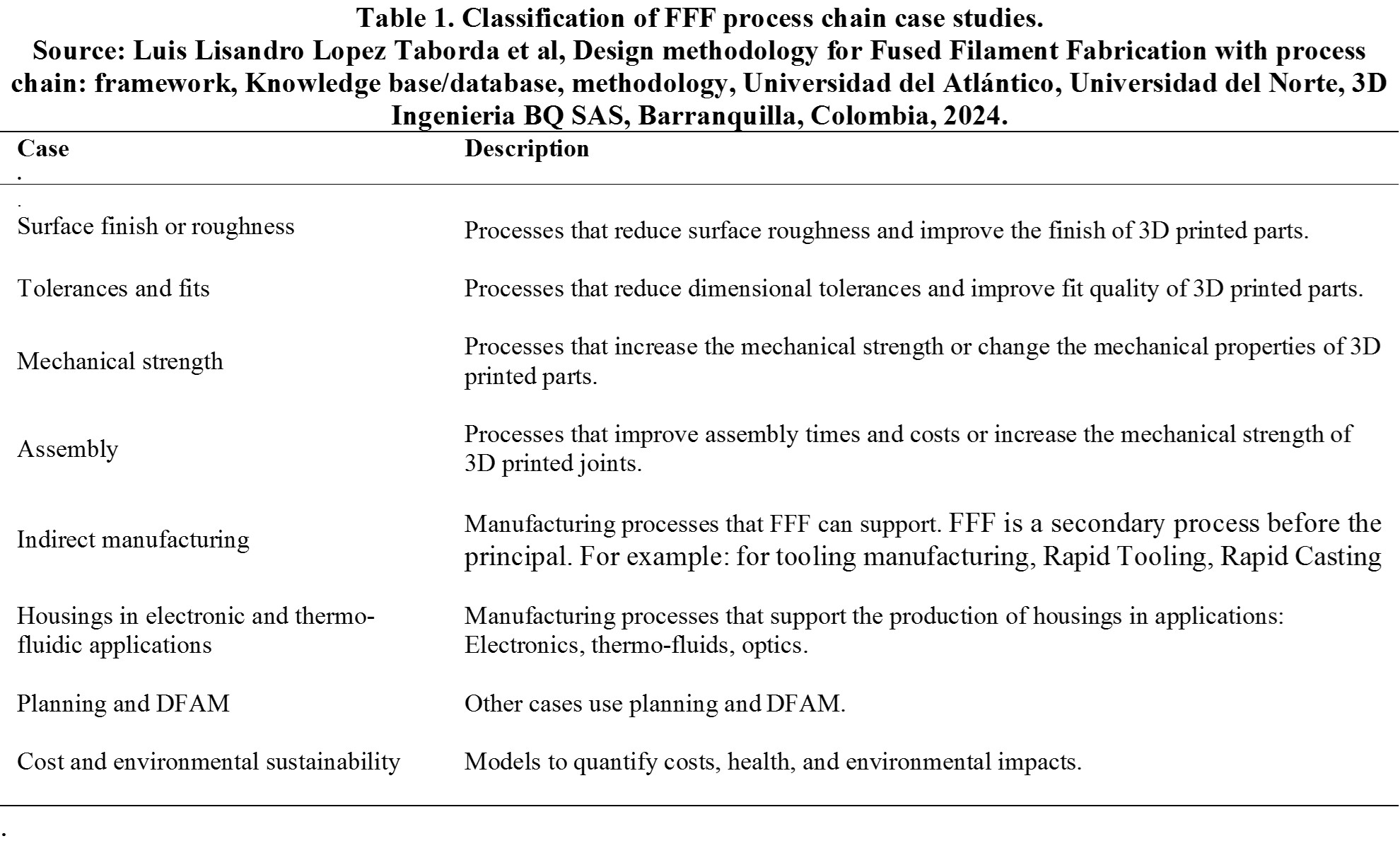
Table 1 summarizes the classification and description of the FFF process chain cases that were found during the case analysis of the research
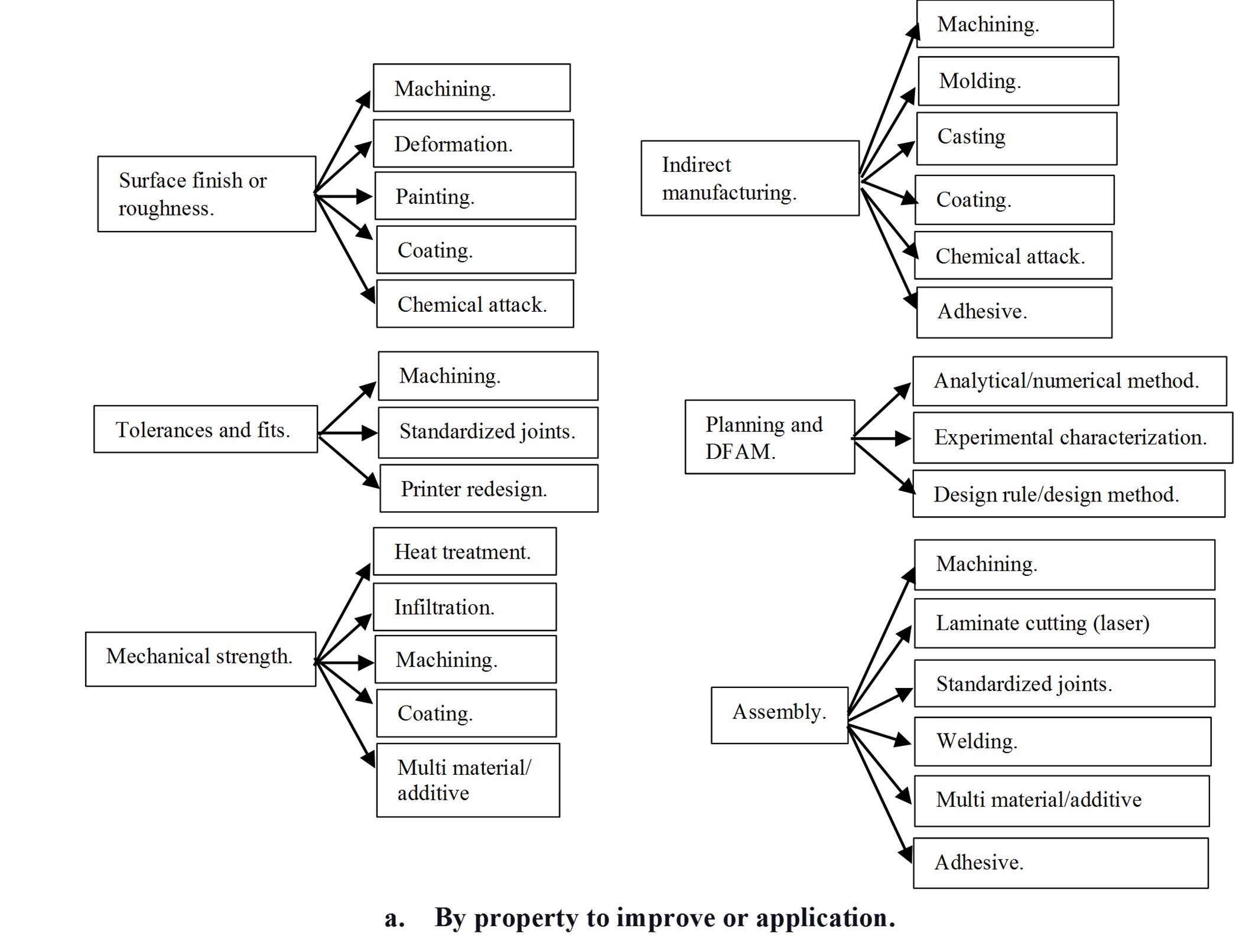
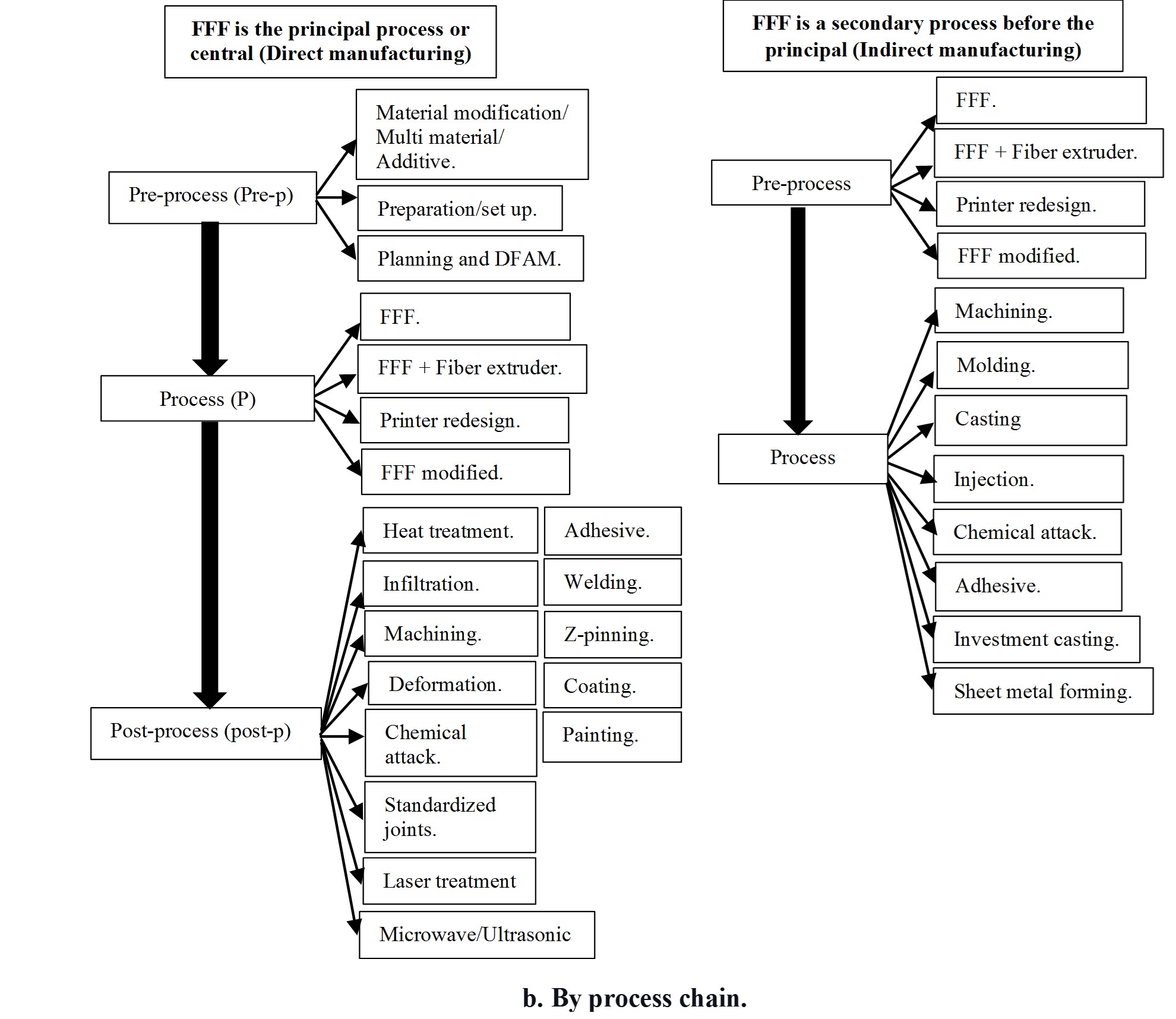
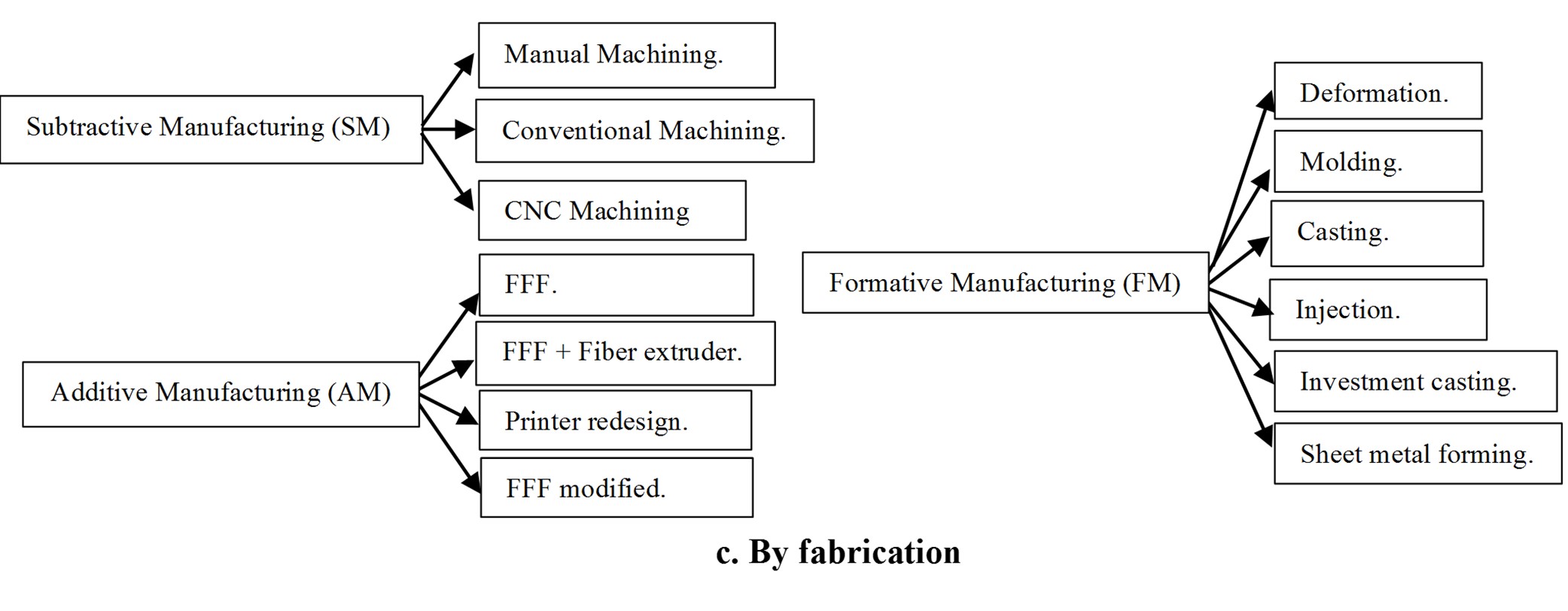
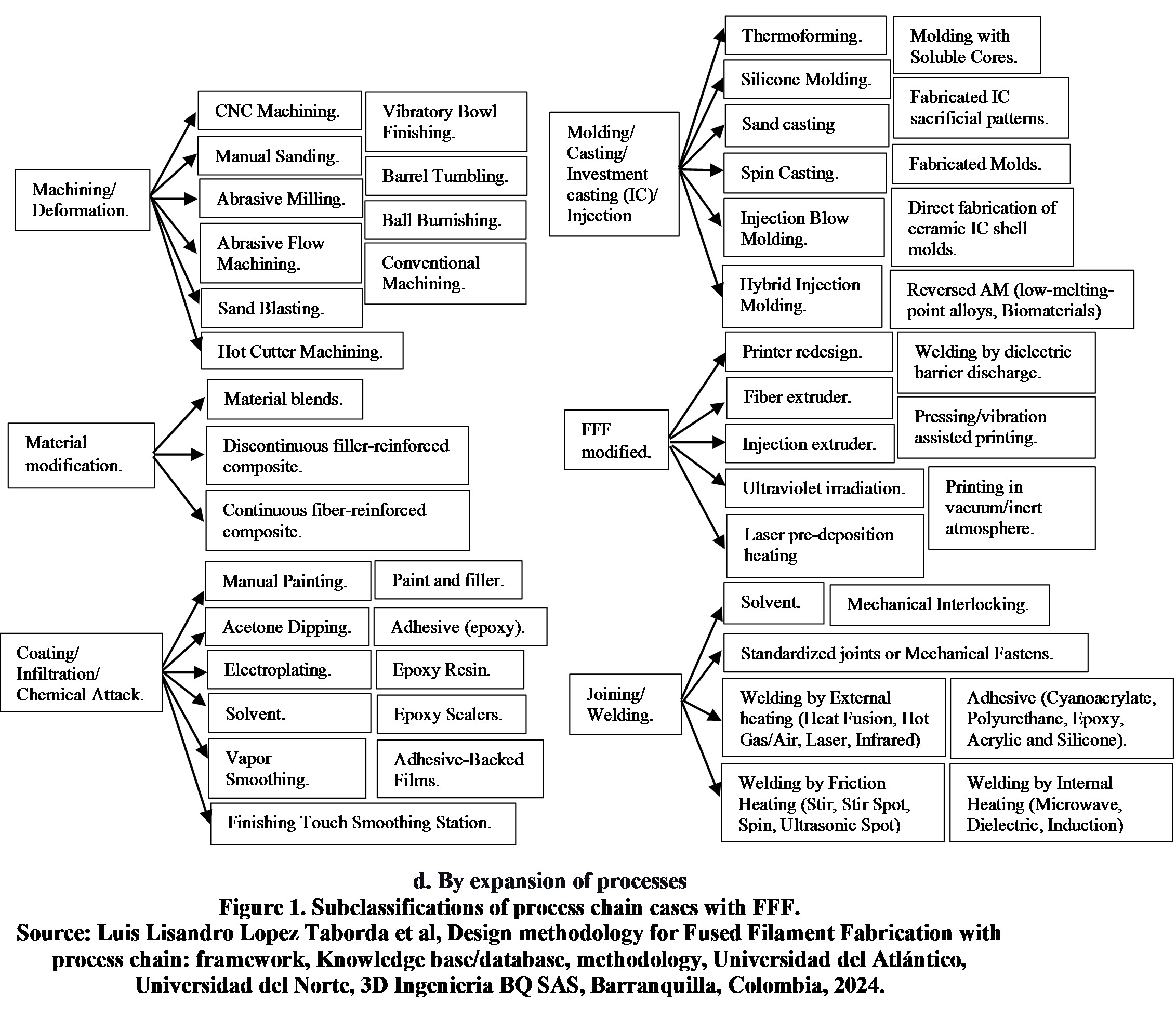
Figure 1 summarizes the FFF process chain case subclassifications obtained from the previous table and during the analysis of cases.
Figure 1 excludes the cost and sustainability case as it applies to all other cases. Housing cases are omitted as they encompass the same processes as indirect manufacturing and assembly. While not explicitly stated, each case includes planning and DFAM, which involves manufacturing and design planning based on design rules, theoretical-numerical methods, or experimental characterizations.
Figure 1b highlights FFF’s role in the process chain, either as primary manufacturing or for creating supporting tools, including mandatory setup operations. Post-processes like molding/casting extend the chain. Figures 1c and 1d differentiate manufacturing types and show specific processes.
Next, there are some guidelines for Process Chain with FFF cases with their coding, obtained after analyzing the respective references, and grouped by case study and common trends, highlighting in bold the competitive advantages that can become innovations. Also, the section aims to identify the quantitative and qualitative findings that facilitate decision-making based on accurate figures, which tend to improve products and constitute competitive advantages, therefore, product innovation.
References
[1]M. P. Sealy, G. Madireddy, R. E. Williams, P. Rao, and M. Toursangsaraki, “Hybrid Processes in Additive Manufacturing,” J. Manuf. Sci. Eng., vol. 140, no. 6, Mar. 2018.